
Costa Rica Through a Photographer’s Eyes – What a Wildlife Photography Tour Really Offers

What does it feel like to photograph wildlife in one of the most biodiverse places on Earth?
Over eleven days in Costa Rica, wildlife photographers experienced constant opportunities to capture colour, behaviour and light — from spectacular hummingbirds and iconic toucans to powerful King Vultures and the striking Resplendent Quetzal.

This journey was built around patience, flexibility and respect for nature. Rather than rushing between locations, photographers worked with local experts and a relaxed daily rhythm, allowing time to focus on behaviour, light and composition — and to capture moments few photographers ever witness.
Join us as we share the highlights and lessons from a journey.
You can also view a larger selection of images in our Flickr gallery.

Arrival in Costa Rica
19 November
We began our Costa Rica photography tour in San José. The first day was intentionally kept calm. Participants arrived in San José on different flights and at their own pace. Transfers were arranged from the airport to the hotel, making the arrival smooth and easy, without any unnecessary hassle.
The first impression of Costa Rica was immediate – warm air, lush surroundings and a clearly tropical atmosphere showed that we were in a very different environment from home.
In the evening, we met briefly at the hotel to go through plans for the following day and practical details, so that the morning departure would run smoothly. The mood was relaxed but expectant. For many, this was their first time in Costa Rica, and thoughts were already turning to the coming days, the sounds of birds and the first photography opportunities. Camera equipment was discussed in particular, as flash photography was planned for the first full day.
The First Photography Day – Hummingbirds and Surprise Owl
20 November

On the second day, we left the hotel at 8 a.m. and drove towards our first photography location. After about two hours on the road, we stopped near a small café, from where a path leads towards a scenic waterfall. Rain was falling steadily, so we stayed close to the road and focused on setting up our first photography session.
While participants checked camera settings, our local guide prepared the multi-flash system. The group was divided into two smaller groups so that everyone could photograph calmly and without pressure. Flowers collected along the way were placed ready for photography, and each participant photographed three different setups.
Hummingbird photography using a multi-flash system in Costa Rica.
For many, this was a challenging but rewarding introduction to flash photography. With guidance, suitable settings were found together, and confidence grew quickly. During the session, we photographed five hummingbird species: Green-crowned Brilliant, Violet Sabrewing, Green Hermit, Coppery-headed Emerald, and Rufous-tailed Hummingbird. Everyone came away with very different images and a much better understanding of the technique.

After the photography session, we continued to our next destination, where we would stay for the following three nights. After check-in and dinner, the day ended with a pleasant surprise: the night guard informed us that a Black-and-white Owl had appeared in the garden of our accommodation. For many participants, this unexpected encounter was the perfect way to end the first full day of the tour.

Toucans, King Vultures and Bats
21–22 November
These two days formed a relaxed but very productive core of the tour, built around repetition, flexibility and time. Rather than rushing from place to place, we focused on a small number of excellent locations and returned to them on both days.

Morning: Toucans and the Private Photography Deck
Both mornings began with Toucan photography at our accommodation. Participants could choose whether to join the group before breakfast or sleep a little longer and start later. Rainy conditions on the first morning were especially welcome – photographing Toucans in the rain often produces the most atmospheric images.
Several Keel-billed Toucans were active from early morning, with Collared Aracaris also visiting regularly. Many other tropical forest species were present as well, offering constant photography opportunities.
The photography deck used for toucan sessions, reserved exclusively for Finnature group.
For these two days, we had the photography platform reserved exclusively for our group. While other photographers may visit the area, having a private deck meant better shooting angles, more space, and the freedom to work calmly without crowding or pressure. This made a clear difference, especially during busy feeding periods.

Late Morning and Midday: King Vulture Photography
After breakfast, we headed to the King Vulture photography hides. Timing was adjusted according to weather conditions, allowing us to arrive without getting soaked despite unstable forecasts.
The area includes four hides, each with slightly different strengths. Two of them are particularly useful: one offers excellent opportunities for flight photography, while another provides a lower shooting angle for portraits and behavioural images. Around ten King Vultures were present, together with Black Vultures and Crested Caracaras.
The photography hide used for King Vulture sessions.
One of the advantages of this setup is flexibility. Photographers can decide themselves how long they wish to stay. Some returned to Toucan photography before lunchtime, while others remained at the hides longer, waiting patiently for activity. Those who stayed were rewarded with rain showers on the first day, which pushed birds back into the trees and created good flight situations as they returned to the feeding site.
Importantly, we had two separate King Vulture sessions, which is more than many groups experience. This allowed photographers to learn the site on the first visit and refine their approach on the second.

A Situation We Did Not Expect – Photography with Respect for Wildlife
During the second visit, an ethical issue arose when another group attempted to drive birds into flight to create action images. We could not accept this approach. While feeding sites already influence natural behaviour, deliberately flushing birds crosses an important line for us as guides and photographers.
King Vultures at this site have become accustomed to hides and normally behave calmly. Forcing them into flight risks changing that behaviour for everyone. Flight images are possible without disturbance for those willing to wait, observe and understand the rhythm of the site.

The issue was discussed with the site owners after the session, and fortunately it was taken seriously. Ethical decisions like these are an essential part of responsible wildlife photography and guiding.
Despite the situation, we were rewarded later with excellent photography opportunities. A total of 15 King Vultures visited the site, including some younger birds, and everyone obtained successful images, including flight shots.

Afternoons: Back to Colourful Forest Life
After lunch, we returned to Toucan photography and the surrounding feeding areas. The afternoons were hot and humid, and bird activity slowed at times, but patience paid off. At best, four Keel-billed Toucans were present simultaneously, and a lively group of Brown-hooded Parrots provided constant action.
The feeding areas also attracted a wide variety of other species, including Tanagers, Honeycreepers, Great Curassows, Crested Guans, and occasional mammal encounters such as Agoutis and White-nosed Coatis moving through the lodge grounds. There was also time to explore the surroundings of the accommodation at a relaxed pace, photographing species such as Kingfishers and other birds found along nearby paths and streams.

Evenings: Bat Photography and Unexpected Owl
Both evenings were dedicated to bat photography using flash, with a setup very similar to the hummingbird sessions. The group was divided into two halves, with one half photographing bats on the first evening and the other half on the second.This allowed everyone unhurried time to work calmly and experiment with settings.

At least two bat species were photographed, possibly even three. On the second evening, activity was clearly higher, providing even more opportunities for strong images. For many participants, bat photography turned out to be one of the most enjoyable and surprising experiences of the tour.
The nights also offered their own moments. Forest sounds filled the darkness, and on one evening a sudden loud crack reminded us how alive the surroundings were, as a roosting Black Vulture broke a branch and searched noisily for a new perch. Another night ended with a visit from a Crested Owl, spotted by the night guard in the garden and photographed at close range.

A Private Garden and Forest Specialities
23 November
The fifth day marked a clear transition in the tour programme. After the final morning photographing Toucans, we packed up and headed towards new locations.
Our first destination was the garden of a local naturalist, Cope, located in the middle of a residential area. Over the years, he has carefully developed his backyard into a remarkably diverse garden that attracts an impressive variety of wildlife. For first-time visitors, the place is always surprising – a small but vibrant oasis surrounded by houses.

Bird activity was already high when we arrived. However, with cloudy weather and rain forecast, Cope suggested a flexible approach. Instead of starting immediately in the garden, we drove a short distance to a nearby forest before the rain and returned to garden later in the afternoon.
In the forest, we focused on smaller mammals and owls. We observed several bat species, including Honduran White Bats, tent-making bats and Pygmy Round-eared Bats. The white bats were a particular highlight – one of only two truly white bat species known in the world. We also encountered a Crested Owl and a family group of Spectacled Owls, although dense vegetation made photography challenging.

In the afternoon, we returned to Cope’s garden, where activity had increased noticeably. Species photographed included a Crested Oropendola family group, Montezuma Oropendolas, Keel-billed Toucans, and the Yellow-throated Toucan, which had been missing earlier in the trip.

Hummingbird photography was also a key part of the afternoon. With light levels remaining low, small additional lighting was used. Species photographed included for example White-necked Jacobin and Long-tailed Hermit. To round off the day, we were also able to photograph a sloth moving slowly through the vegetation near the garden.
This day offered a very different rhythm compared to the previous ones – slower, more exploratory, and rich in variety – and highlighted how flexible scheduling allows us to make the most of changing conditions.

Frogs, Snakes and Macaws
24 November
The sixth day introduced a completely new set of subjects and techniques. We began the morning with frog and snake photography. Our local guide had prepared a flash photography setup at a nearby farm, where the animals to be photographed had been carefully collected for the session.

The photographic technique was essentially the same as used for hummingbirds and bats, but the subjects behaved very differently. Frogs and snakes move slowly, allowing more time to focus on composition and lighting. Species photographed included iconic Costa Rican frogs such as the Red-eyed Tree Frog, Green-and-black Poison Dart Frog and Strawberry Poison Dart Frog, as well as snakes like the Eyelash Viper and Side-striped Palm Pit Viper.
Flash photography works particularly well with reptiles and amphibians. As many of these species are naturally nocturnal, controlled lighting allows images to be created against dark backgrounds, giving a strong night-time feel even during daytime sessions. Although some participants were initially hesitant about reptile photography, the session turned out to be both enjoyable and surprisingly popular.

After lunch, we continued to a macaw conservation centre, where rehabilitated Scarlet Macaws and Green Macaws that have been released still remain in the surrounding area. Due to the intense afternoon heat, we began by photographing White-faced Capuchins in the garden. These curious and playful monkeys require some caution, as hats and loose items can quickly become their toys.

Highlands and Resplendent Quetzals
25–27 November
The next stage of the journey took us into the Costa Rican highlands, home to one of the country’s most iconic bird species: the Resplendent Quetzal. Compared to the lowlands, the climate was cooler and the landscape noticeably different, marking a clear change in atmosphere.

Arrival in the Highlands
After arriving at our hotel, we had lunch and began with relaxed photography at the hotel’s feeding stations, focusing on highland hummingbirds in natural light. Species visiting the feeders included for example Fiery-throated Hummingbird, White-throated Mountain-gem, and Volcano Hummingbird.
Originally, the afternoon was planned for general bird photography at another feeding site. However, based on fresh information from local guides that quetzals had been more active in the afternoons, we adjusted our plans and headed directly to the quetzal photography area instead. This flexibility is essential when working with a species whose movements depend strongly on weather and food availability.

The exact quetzal locations vary depending on which wild avocado trees are fruiting. On this occasion, reaching the site required an uphill walk of around 300 metres. While manageable at a calm pace, the altitude of approximately 2,700 metres made the climb noticeable for most participants. A photography shelter with benches provided a stable base at the site.
Several quetzals were already present when we arrived, including adult males with fully developed tail feathers and younger birds whose tails were still growing. The birds remained mostly deep in the foliage, offering limited photographic opportunities, but we were able to obtain our first images of the species – an important starting point.
At the photography site for Resplendent Quetzals in Costa Rica’s highlands.
Returning to the Quetzals
The following day began with a calm morning visit to local café feeders, where we photographed hummingbirds, woodpeckers and other highland species. Birds observed included Acorn Woodpecker, Large-footed Finch, Silver-throated Tanager, and the much-anticipated Emerald Toucanette, which appeared briefly.
After lunch, we returned for the second quetzal session. Conditions were more favourable, and during the afternoon an adult male quetzal perched on an open branch directly in front of us, finally offering clear photographic opportunities. Although the weather remained variable, the session was a clear improvement on the first day.

The final morning with Resplendent Quetzals – great success!
This was the final morning with the Mayan Quetzals. We departed from the hotel early, at 5:15 a.m., heading out for the last quetzal session of the trip. The early hour made the uphill walk feel more demanding than usual, but by walking steadily and at a calm pace, we eventually reached the site.
The early start was well worth it. Although we saw fewer birds in the morning compared to the afternoon sessions, only one bird was truly needed. An adult male with a long tail perched beautifully on branches directly in front of us. He first stayed on one branch for a short while before moving to another, where he remained for longer. We were able to admire and photograph this stunning bird for approximately 15 minutes at close range. The morning offered excellent photographic opportunities for everyone.
The Emerald Toucanette also appeared in a tree nearby, but remained far enough within the foliage to make photography challenging.
Many tour operators visit the quetzals only once or twice, but we had scheduled three sessions. The Mayan Quetzal is one of Costa Rica’s most iconic bird species, and obtaining good photographs can be challenging and is often highly dependent on weather conditions.
After lunch, it was time to head back towards warmer conditions and continue our journey to the next destination, the Tárcoles River.
Tárcoles River
28 November
The day was dedicated to river cruises on the Tárcoles River. We made two separate cruises, allowing us to experience the river in very different light and conditions.
Early in the morning, we departed for the first cruise to enjoy the calm atmosphere of the river at sunrise. The boat was reserved exclusively for our group, ensuring plenty of space for photography. The river was peaceful, and the soft morning light created excellent conditions for photographing a wide range of species. Highlights included Roseate Spoonbill, Bare-throated Tiger Heron, Yellow-crowned Night Heron, Green Kingfisher, and Amazon Kingfisher.

In the middle of the day, we took a break and returned to the river in the afternoon, when boat traffic was more active and the atmosphere noticeably different. During the second cruise, we continued exploring the river and enjoyed good photographic opportunities of crocodiles and Yellow-headed Caracaras.
We also searched for the Boat-billed Heron, but on this occasion the birds remained deep within the vegetation and did not offer photographic opportunities. As the day drew to a close, we spent the final light watching pelicans and admiring the sunset over the river before returning to the harbour.

Saying Goodbye to Costa Rica
29 November
The final morning was a quiet and unhurried one. Participants departed for the airport according to their individual flight schedules. The first transfer left early in the morning, while a second followed later after hotel check-out.
Overall, the trip offered excellent photographic opportunities for everyone. Costa Rica delivered exactly what it promises: extraordinary biodiversity, vibrant colours, and a wide variety of photographic situations within relatively short distances.
From a guide’s perspective, this journey once again confirmed why Costa Rica has become one of my personal favourite destinations. The combination of traditional bird photography and carefully planned flash photography sessions, together with comfortable accommodation and well-organised photography sites, makes it a destination to which it is a pleasure to return.
In the end, the journey was less about ticking off species and more about spending time in the field — returning to the same places, observing behaviour, and letting light, weather, and wildlife set the rhythm of each day.

If You’d Like to Experience Costa Rica Yourself
This journey reflects how we approach wildlife photography in Costa Rica: carefully chosen locations, ethical field practices, and enough time in the field to photograph without rush.
We return regularly with small-group photography tours built around the same principles described in this story.
You can find more information about our upcoming Costa Rica wildlife photography tour here.
Get close to nature with Finnature
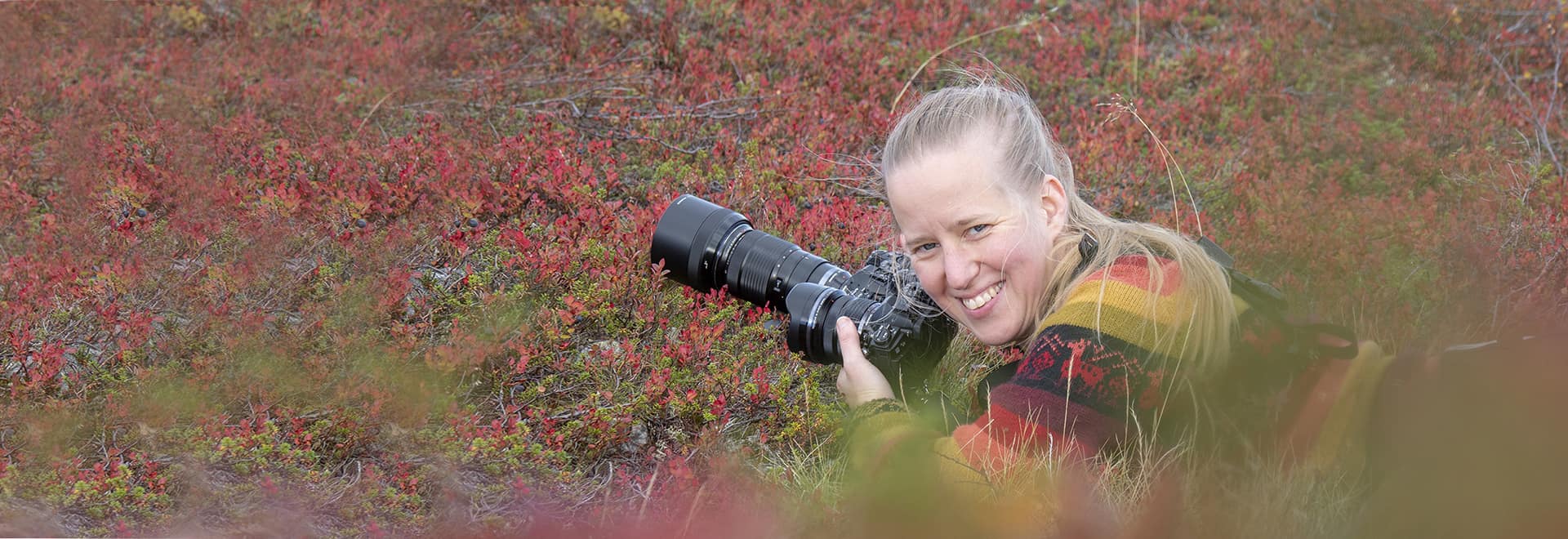
Author: Kaisa Peltomäki
Managing Director at Finnature | Professional Wildlife Photographer | OM SYSTEM Ambassador
Through her work, Kaisa aims to bring people closer to wildlife and natural environments — not only through striking images, but by encouraging understanding and respect for the natural world.
You can follow Kaisa’s work on Instagram in and Facebook, Or visit on her personal Blog where she shares stories from behind the scenes of nature photography.
 Kirjoittaja kaisa