
Seasons That Make Golden Eagle Photography Unforgettable in Finland
For wildlife photographers who dream of photographing majestic Golden Eagles in the wild, Finland offers unforgettable opportunities through all seasons.
From snow-scaped winter light to fiery autumn colours, each time of year brings its own atmosphere, challenges and rewards — and knowing these seasonal rhythms helps you choose the moments that produce your best images. In this guide, we break down what to expect and how to make the most of every season.

Practical matters also play a role – when selecting the time to come: daylight hours, the amount of light, and one’s own schedule all affect the choice of timing for photography. So rather than one perfect time, there are many good times – it all depends on the kind of images you wish to create.
Each bird photography hide has its own rhythm through the year! Within each season, small “mini-seasons” appear as nature changes, influencing eagle behaviour and activity and backgrounds. Knowing these cycles helps you choose the right time for your Golden Eagle photography adventure in Finland.
Seasonal highlights for photographers:
• Winter brings dramatic light and snowy scenes
• Spring and late winter give longer daylight hours
• Autumn offers vivid colours and misty mornings
• Each season has unique challenges and rewards
Midwinter: Frost, Snow and the Power of Cold
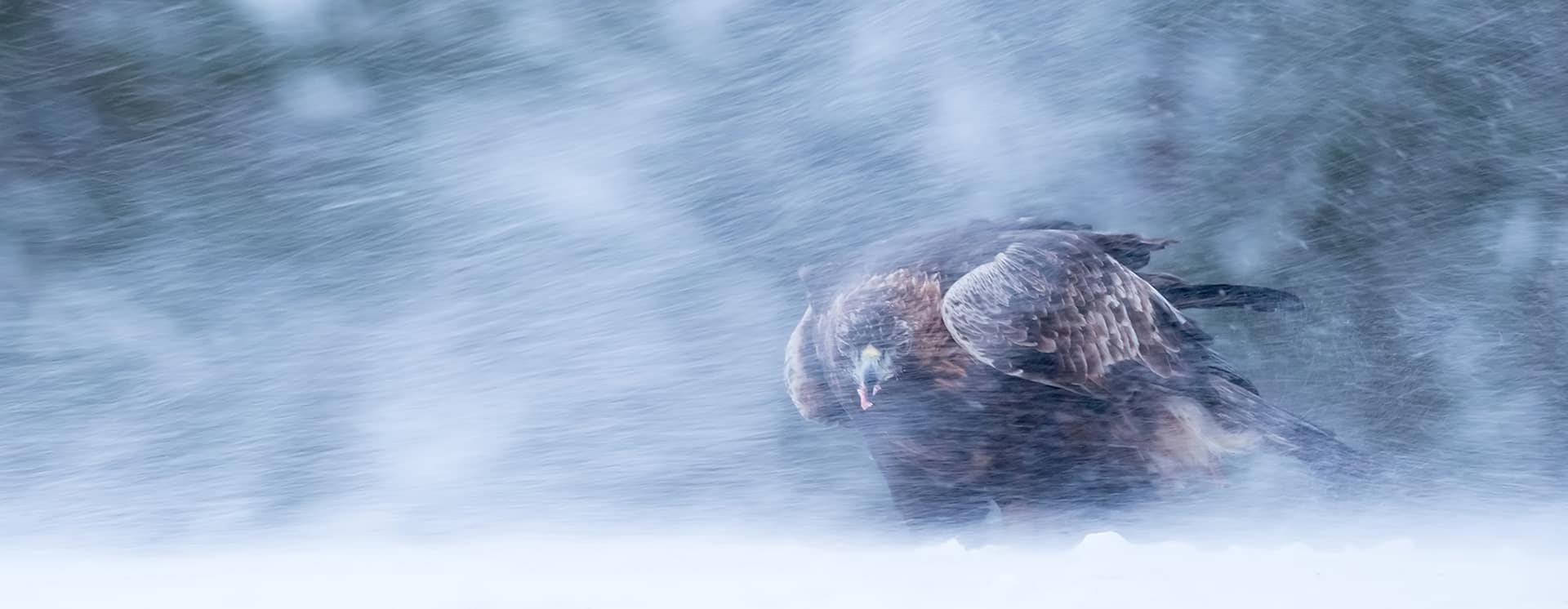
In January, the days are short – only about four hours of daylight in Northern Finland. That means a short shooting day. The limited daylight challenges both photographer and equipment, but it also gives better chances to get eagles to feed at the same time. Since eagles feed only in daylight, shorter days often increase your chances to witness fights between eagles.
Severe frost (–30 °C or colder) gives the scene a magical look – frosted trees, frozen breath and sometimes even rime on the eagle’s feathers. A quick warm spell after extreme cold can also trigger more action, as Eagles know melted food is easier to eat. Winter Golden eagle photography is a beautiful mix of harsh conditions and soft light – a reward for patient photographers.

During midwinter, small birds and squirrels visit the feeders frequently. While waiting for eagles, you can photograph tits, jays, woodpeckers and squirrels, which bring life and colour to the snowy scene.
Around this time, you can easily combine your Golden Eagle hide session with our forest feeder hide, where Goshawks are active during the day and Eagle Owls often visit at night.
Please note that from January to March, temperatures in Finland can be very cold and roads are icy. We strongly recommend using a four-wheel-drive vehicle, as snowfall can occur suddenly and driving conditions may change quickly.
February to March: More Light and Longer Days

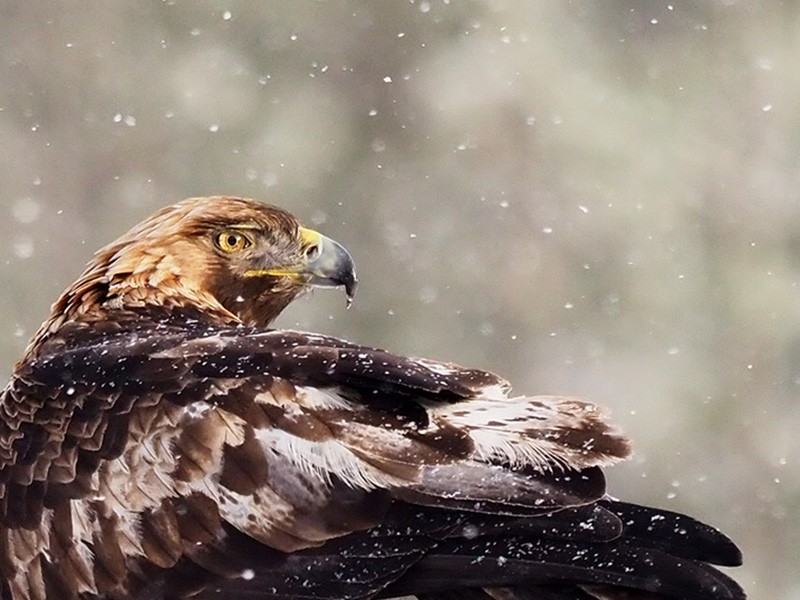
As spring progresses, the small birds and squirrels continue their regular visits to the feeding site. When the days get milder, Black Woodpeckers and Grey-headed Woodpeckers gradually reduce their visits, but new species may appear in their place—such as Redpolls or even White-tailed Eagles on migration might stop by for a brief visit.
With the increasing daylight, photographing small birds becomes easier and more rewarding. As light levels improve, it’s the perfect time to practise capturing birds in motion—such as the take-off of Crested Tits, woodpeckers, or Jays. Brighter conditions allow for faster shutter speeds, making early spring an excellent period to experiment with different camera settings before the busy bird photography season truly begins.’

Late March is a wonderful time to combine Golden Eagle photography with other activities such as Black Grouse lekking or forest feeder hides for Goshawks and Eagle Owls. It’s a productive period with plenty to photograph and dynamic wildlife behaviour everywhere.
Please note that from January to March, temperatures in Finland can be very cold and roads are icy. We strongly recommend using a four-wheel-drive vehicle, as snowfall can occur suddenly / snow might melt quickly during warm spring days and get the roads soft so driving conditions may change quickly.
September: Autumn Colours, Mist and Sparrowhawks
As autumn colours spread across Finland, the landscape transforms into a painter’s palette. Red ground foliage and yellow birch leaves make September photos strikingly different from winter scenes. This is a beautiful time for wildlife photographers – warm tones, misty mornings, and lively feeding sites. If the local eagle pair has bred successfully, even a young eagle from the summer may visit the hide – a rare opportunity to witness fascinating interactions.
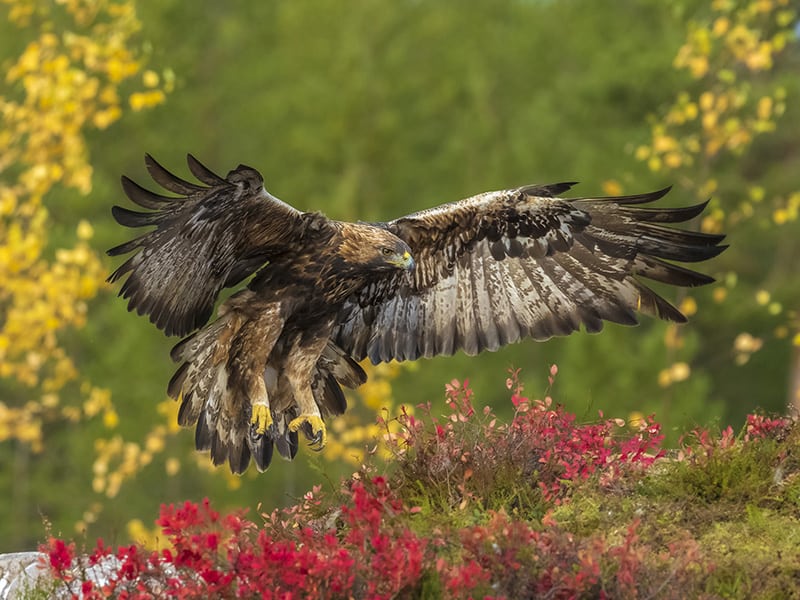
Golden Eagle landing in autumn colors. Photo: Jari Peltomäki
We start bird feeding well before autumn, so activity is high by September. Sparrowhawks are frequent visitors, often chasing and playing with jays, creating thrilling photo moments while waiting for eagles. Fast and unpredictable, they test both photographer and camera settings – time flies as you try to capture their speed!
An autumn eagle hide day can easily be combined with forest feeder hides, where Eagle Owls often appear – sometimes even in the soft morning light. Goshawks begin to visit again, and the autumn Black Grouse lek adds another highlight to a colourful, wildlife-filled season before winter returns.

October: A Quieter Phase During Hunting Season
October marks the start of the elk/moose hunting season in Finland, which briefly affects eagle activity. As hunting begins, natural food sources become more abundant in the wild, and eagles shift temporarily to easier meals.
For this reason, we pause the feeding for about two weeks at the start of the month. Once the main hunting pressure eases, eagles gradually return to the feeding sites, and activity stabilises.

If your main goal is to photograph Sparrowhawks, early October can still be a good time. The hides remain open, and these fast-moving raptors bring life to the day, sometimes joined by eagles. However, do note that eagle visits may be less frequent in the first weeks of the hunting season.
October is therefore a calmer phase in the Golden Eagle photographer’s year – a short break before the snowy landscapes and magical light of the coming winter.
November to December: Waiting for the First Snow
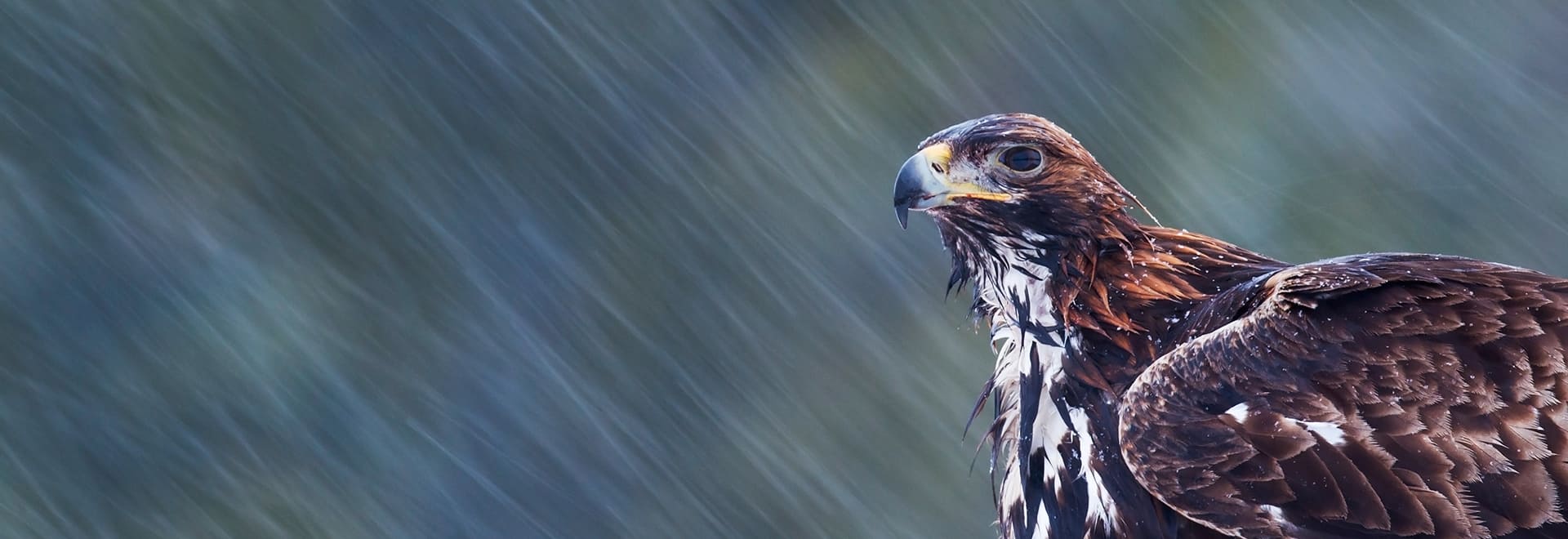
Snow arrives in the Oulu region sometime between late October and December. November is often the darkest month of the year, especially if the snow hasn’t arrived yet. While the conditions can be challenging, they also create beautifully moody and atmospheric photography opportunities.

Eagle feeding continues throughout the late autumn and winter, and bird hides are available for rent even during the darkest weeks. The combination of twilight blue light and the season’s first snow can produce truly unique wildlife images.
For those new to hide photography, the short winter days can actually feel easier – the day is not too long to stay focused, even if the limited light makes photography more challenging. Patience still matters, and every day brings a new chance to witness that magical moment when the first snow falls and the landscape transforms once again.
If you are interested in Golden Eagle hides read our blog post What to Expect when visiting at Golden Eagle hides.

Finnature Photo Guarantee – Photograph with Confidence
Finnature offers a Photo Guarantee for all eagle and sparrowhawk photography sessions.
If, during your day in the hide, you do not get to photograph the main subject of the season – in winter Golden or White-tailed Eagle, or in autumn Sparrowhawk or Eagle – you will receive a free compensation visit.
The guarantee applies when you stay in the hide for the full day as instructed, giving nature the time it needs to deliver its magic.
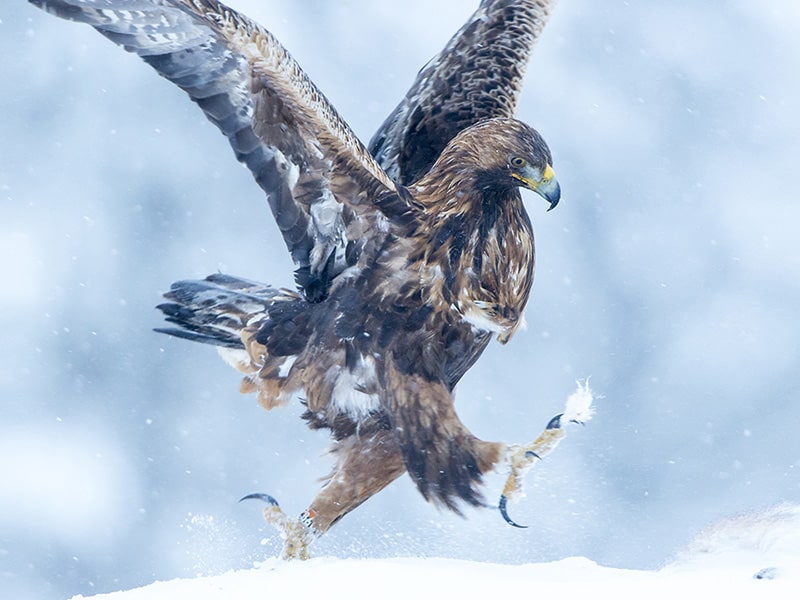
Guided or Independent Golden Eagle Photography in Finland
Planning your next photography adventure? With Finnature, you can experience unforgettable moments with Golden Eagles and other northern icons. Whether you prefer the comfort of a guided tour or the freedom of an independent trip, our hides and expert support will help you capture stunning images and lasting memories.
And if you would like to rent a Golden Eagle photography hide, you can find all details here.
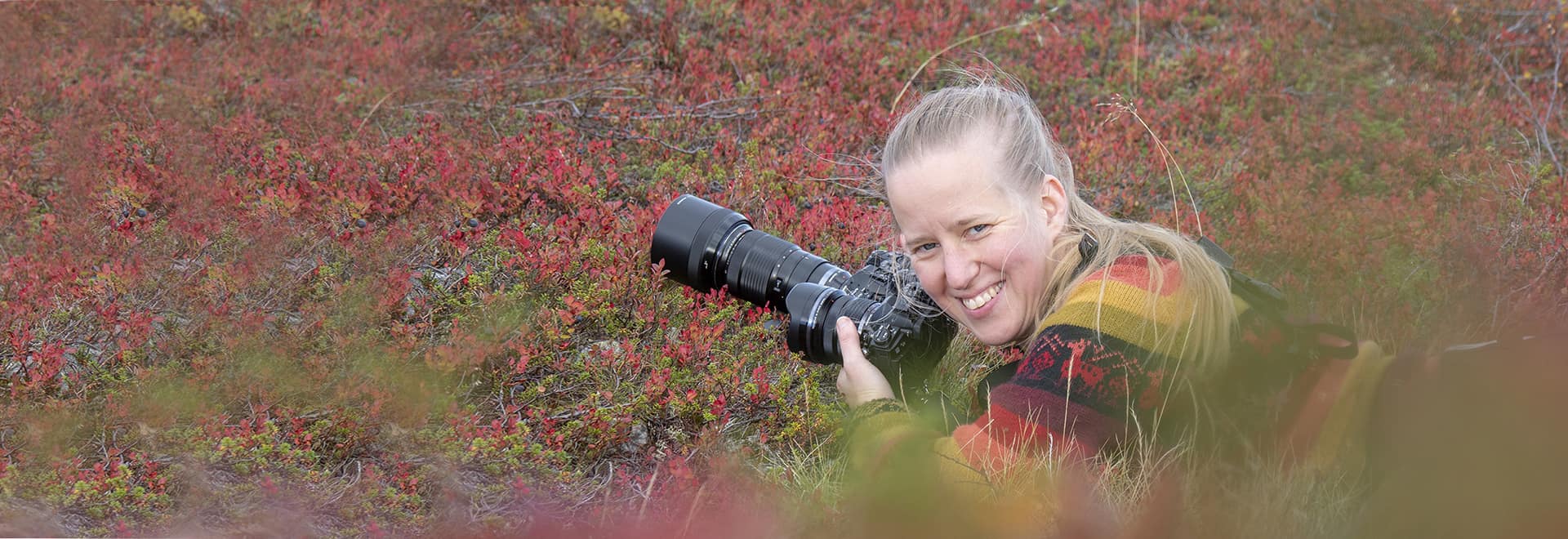 Author: Kaisa Peltomäki
Managing Director at Finnature | Professional Wildlife Photographer | OM SYSTEM Ambassador
Through her work, Kaisa aims to bring people closer to wildlife and natural environments — not only through striking images, but by encouraging understanding and respect for the natural world.You can follow Kaisa’s work on Instagram in and Facebook, Or visit on her personal Blog where she shares stories from behind the scenes of nature photography.
 Kirjoittaja kaisa