
What to Expect When Visiting Our Golden Eagle Hides
When planning your first day at our eagle hide, a few questions usually come to mind. Two concerns tend to stand out: how cold will it be – and what about toilet facilities?
Let’s start with the most important. All of our Golden Eagle hides have heating. Mornings naturally begin at the same temperature as outside, but the hides warm up comfortably during the day. And yes – there is a toilet. It is located in the entrance area of the hide.
But what kind of place are you actually coming to?

Arrival at the Eagle Hides
The guide will meet you at a pre-arranged location, from where we continue approximately 16 kilometres along a forest road to reach the hides. Please note that this is a forestry road. We clear the road regularly during winter, but Finnish winter conditions can change quickly – especially if snowfall is accompanied by wind, or in spring when the road base begins to soften. For this reason, we do not recommend very low-clearance vehicles for accessing the hides.
Our parking area is located about 300 metres from the eagle hides. In autumn, we walk to the hides along the forest road, while in winter we follow a trail. Equipment can be carried to the hide, and in winter we provide a sled that can be used to pull your gear more easily from the parking area.
The winter trail is not ploughed, so after snowfall it may be covered in snow. We recommend winter footwear that reaches at least above the ankle, and especially during snowy conditions proper winter boots are advisable. In spring, sections of the trail may become compacted and icy, which is also worth considering when choosing footwear.
If you have limited mobility and walking on a snowy trail feels challenging, autumn can be an especially good time to visit the hides, as access is then at its easiest.
More Than 15 Years on the Same Location
We have been feeding Golden Eagles at the same location for over 15 years. The area holds a long-established territorial pair, and during winter additional individuals often visit the feeding site. The feeding season begins in early September and continues until the end of March.
In front of the hides lies an open rocky clearing in the middle of the forest. The openness is one of the site’s strengths. We often get to watch as an eagle first lands in the trees at the edge of the clearing and then glides calmly down to the feeding area. Thanks to the clear view, photographing flight shots here feels surprisingly natural for many photographers.
The rocky terrain provides another advantage — we photograph at eye level. Even though the hides are not dug into the ground, the angle remains natural rather than shooting downward.

While Waiting for Eagles
A winter day here is rarely silent. Small birds are also fed in front of the hides, and while waiting for eagles, time often passes photographing tits. Great, Blue, Willow and Crested Tits are regular visitors. In some years, like this one, Siberian Tit visits regularly as well.
Jays and Great Spotted Woodpeckers are familiar sights, and squirrels occasionally appear. In midwinter we may also see Black Woodpecker or Grey-headed Woodpecker.
Light Matters
The rhythm of the day always follows nature. We spend the entire daylight period inside the hide, so the length of the day varies with the season. In January the window of light is short and concentrated. In late winter and in September, daylight stretches much longer, and a day in the hide takes on a very different scale.
The hides are positioned to provide front or side light.
If you would like to read more about the different seasons at the eagle hide, you can find our previous blog post dedicated to that topic.
Differences Between the Hides
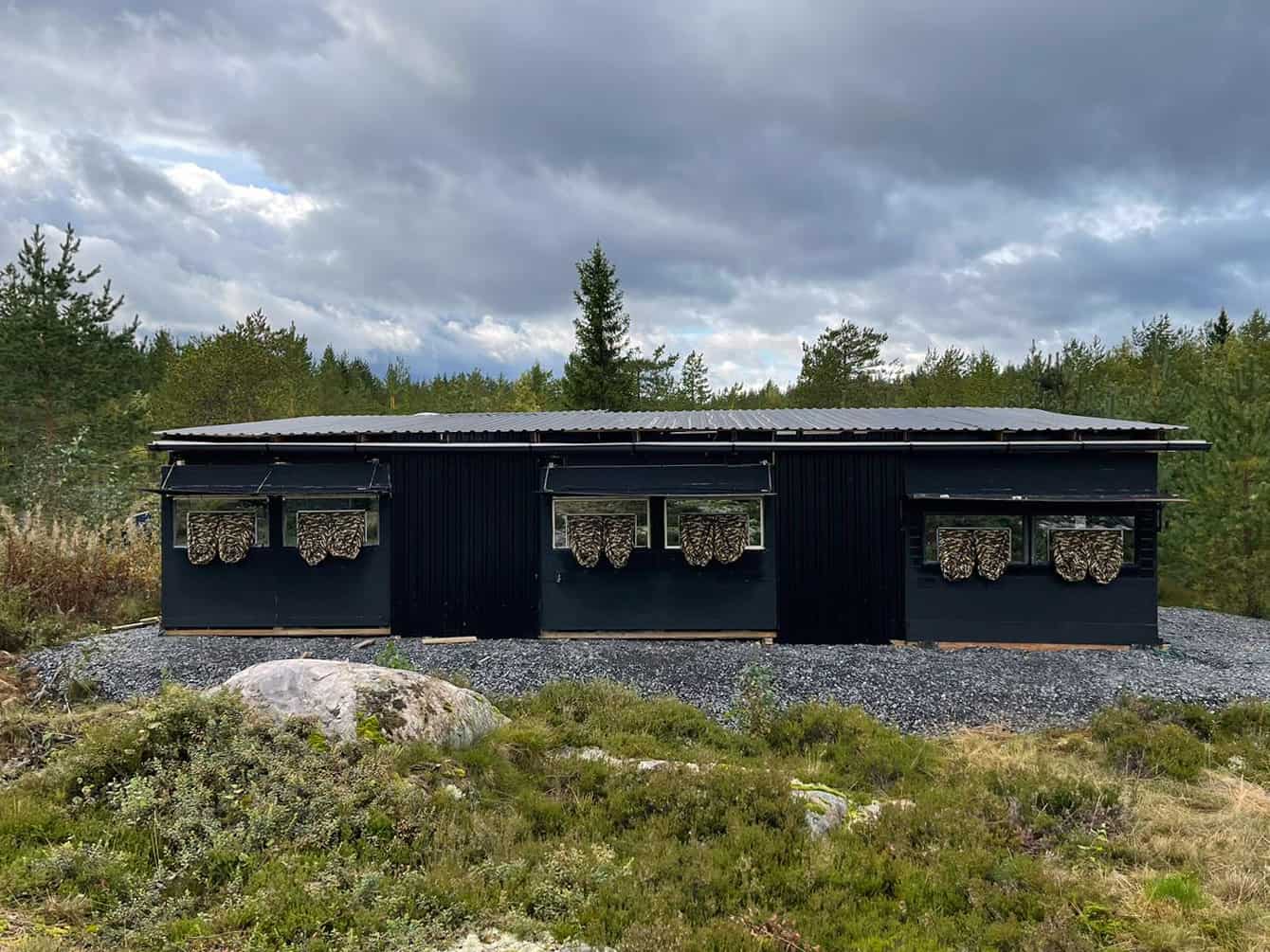
In Utajärvi we have three two-person premium hides connected by a shared entrance area with standing height. In addition, we use a larger hide for groups as well as older economy hides.
In the premium hides, we focused particularly on visibility and ergonomics. The windows are large — specifically so you can follow what is happening outside without constantly having to lean forward. The better you can observe the situation, the easier it is to anticipate a take-off or landing.
For cameras, there is an adjustable rail system so each photographer can set the height to suit themselves. We are all different heights, and there is no single “correct” standard. The premium hides are also equipped with proper office chairs — a small detail that makes a noticeable difference during a long day.
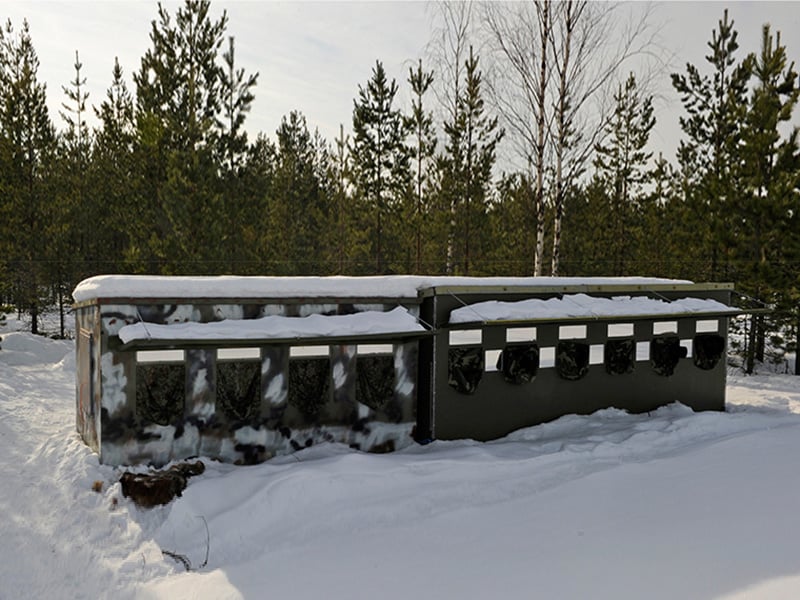
The economy hides are of an older design. They have served photographers for over 15 years, and their design reflects how hides were built at that time. The windows are smaller, there is no standing height, and the shooting platform is fixed. The view, however, is the same — all hides face the same open landscape. The difference lies primarily in comfort, not in the photographic opportunity itself.
All hides have a dry toilet located in the entrance area. In the premium hides, the entrance has standing height, allowing you to stretch your back for a moment. In the economy hides, the entrance space is lower.

Heating
All of our hides use gas heating, which warms the space comfortably even on cold days. It is important to remember, however, that in the morning the hide starts at outside temperature. The first moments inside can feel just as cold as being outdoors, so warm clothing is essential — especially in winter.
On your first visit, our guide will show you how the gas heater works. It is simple to use, but we always go through it together. On return visits it is possible to access the hide independently, and in that case a clear instruction video supports the use of the heater.
A Day That Stays With You
A day in the eagle hide is not only waiting — but there is waiting. It is about observing, listening and following the light. Sometimes events unfold quickly — an eagle arrives, a jay steps aside, snow lifts with the beat of wings.
At other times, the day feels long. The eagle may arrive only late in the afternoon, just when concentration begins to fade. Patience is tested. Wildlife photography is never guaranteed or scheduled — and perhaps that is exactly why the moment when the eagle finally glides across the clearing feels so rewarding.
In our next blog post, we will look at what to bring for a day in the hide — the small practical details that make the experience smoother.
Before that, if you would like to see more closely what our Golden Eagle hides look like, we recommend watching our YouTube video where we visit both the premium and economy hides. The video clearly shows the differences between them. Our groups mainly use the third hide, which is similar in standard to the luxury hides.
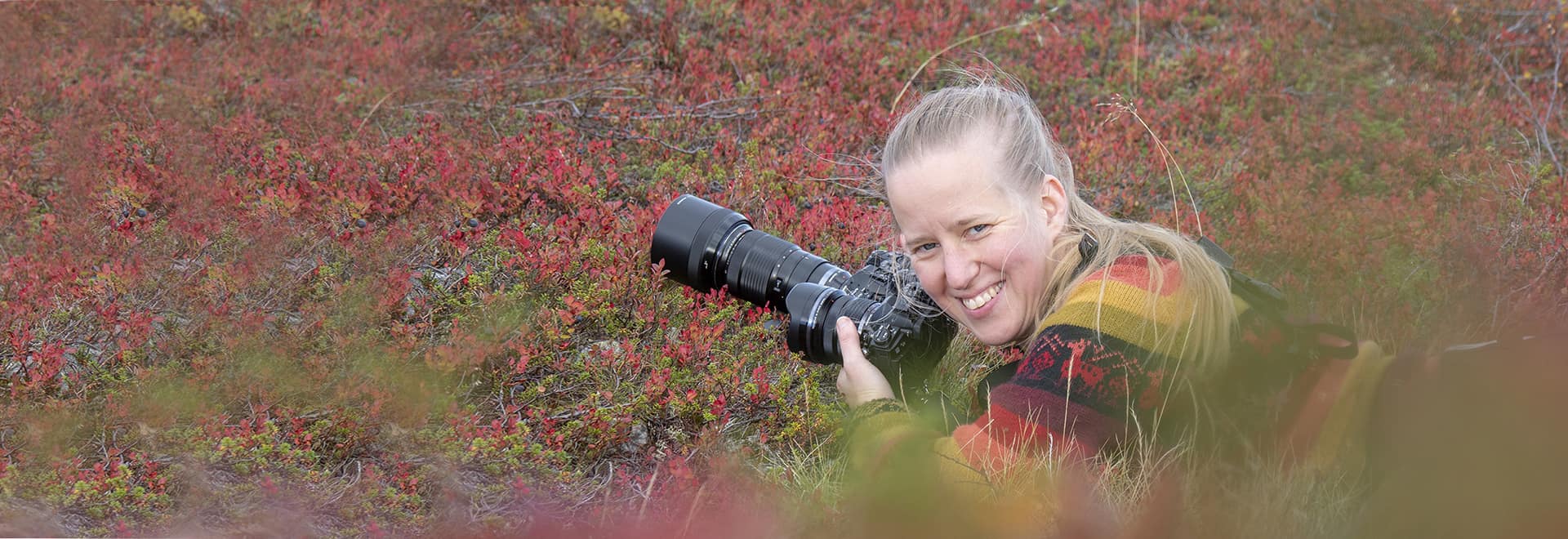
Managing Director at Finnature | Professional Wildlife Photographer | OM SYSTEM Ambassador
Kaisa has guided wildlife photographers in Finland and around the world, combining strong field experience with a deep respect for nature and ethical photography practices.
Through her work, Kaisa aims to bring people closer to wildlife and natural environments — not only through striking images, but by encouraging understanding and respect for the natural world.
You can follow Kaisa’s work on Instagram in and Facebook, Or visit on her personal Blog where she shares stories from behind the scenes of nature photography.
 Kirjoittaja kaisa